
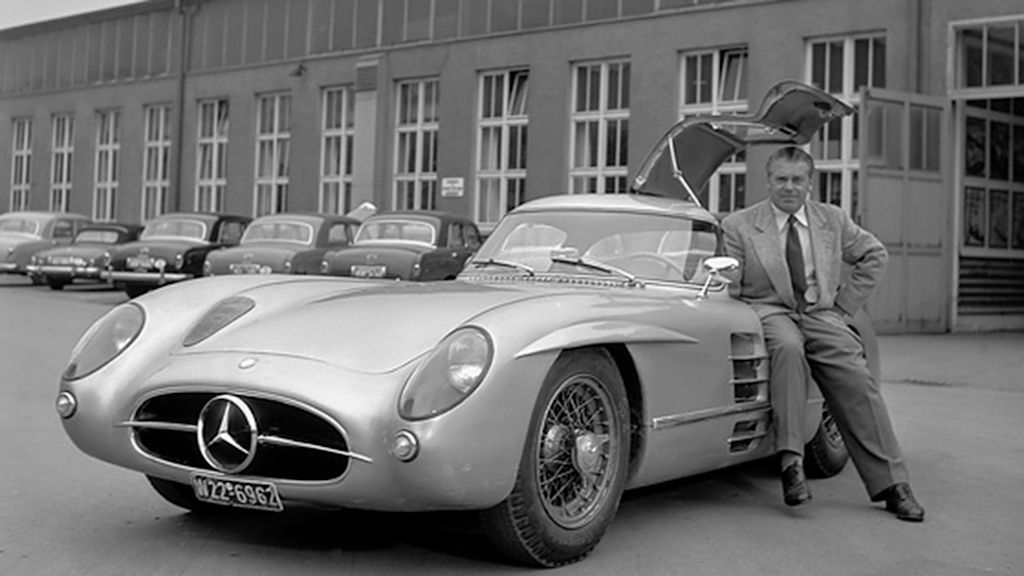
Mercedes-AMG F1 is marking the 120th anniversary of the birth of Rudolf Uhlenhaut, the legendary engineer and Technical Director who shaped the Silver Arrows racing dynasty and once famously out-paced World Champion Juan Manuel Fangio around the Nürburgring Nordschleife.
The team published a tribute to Uhlenhaut, describing him as an “engineer, visionary, gentleman” and crediting him as “the man who made The Silver Arrows… and knew how to make them go.” The celebration highlights one of the most remarkable figures in motorsport history, whose engineering brilliance was matched only by his extraordinary driving ability.
Mercedes recounted a now-legendary anecdote from 1955 that captures Uhlenhaut’s singular talent. During a testing lunch break at the Nürburgring, Fangio — one of the greatest drivers in Formula 1 history — complained about the handling of his Mercedes. Rather than simply noting the feedback, Uhlenhaut rose from the table, climbed into the Silver Arrow, and set about diagnosing the issue himself from behind the wheel.
What happened next has become part of motorsport folklore. Uhlenhaut not only completed his assessment laps but clocked a faster time than the team had managed during the Grand Prix itself. Upon returning, the Technical Director told the great champion, with a wink, that “he just needed more practice.”
Mercedes acknowledged the tale sounds outrageous but described it as “entirely believable” given Uhlenhaut’s unique combination of engineering genius and driving prowess. The team drew a playful parallel to the modern era, noting that this was not a story about Lewis Hamilton and current Technical Director James Allison, but rather their predecessors from seven decades earlier.
Uhlenhaut’s legacy extends far beyond that single anecdote. As the architect of Mercedes-Benz’s dominant racing machines during the 1950s, he helped establish the Silver Arrows as one of the most iconic brands in motorsport. His ability to both design and drive the cars at an elite level remains virtually unmatched in the sport’s history.
The tribute underscores Mercedes-AMG F1’s deep connection to its racing heritage, linking the team’s current operations to the pioneering work of figures like Uhlenhaut who built the foundation for more than a century of competition at the highest level.