
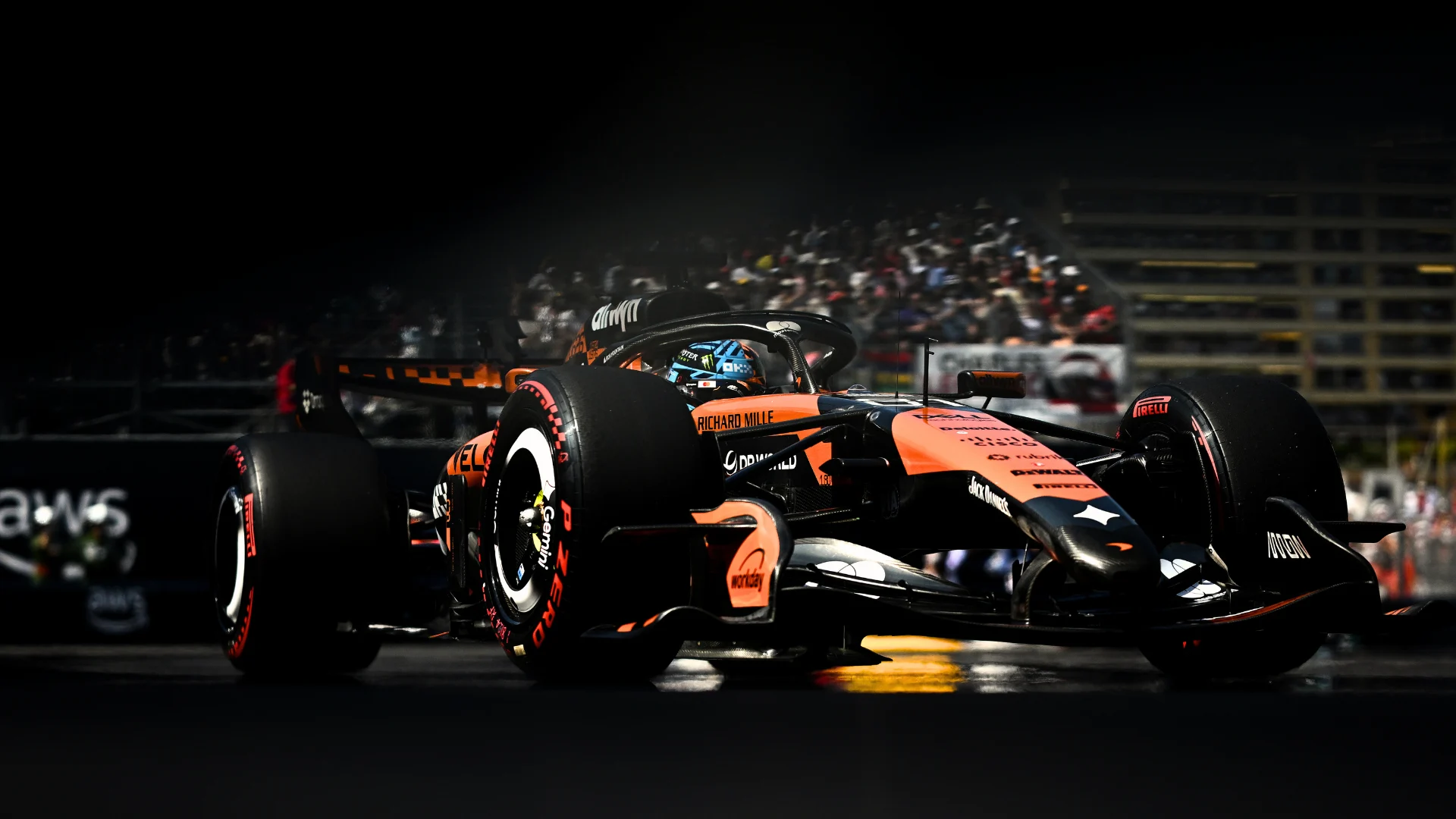
McLaren team principal Andrea Stella has delivered a stark assessment of his team’s competitive position, declaring that back-to-back difficult weekends in Canada and Monaco amount to a “reality check” that demands urgent action on both performance and reliability fronts.
The warning came after McLaren’s 1000th Grand Prix in Monaco ended with Oscar Piastri salvaging fourth place through a race of attrition and penalties, while Lando Norris retired early with a power unit failure. Norris had already lost critical track time during FP2 to a separate power unit issue, and the pair could manage only seventh and eighth in qualifying on a weekend the team had feared would expose the MCL40’s weaknesses.
“There’s certainly an important reality check that comes from Canada and Monaco,” Stella said. “We have not been fast enough, especially in terms of race pace in both Canada and here. And we have not been reliable enough, and when we look at reliability, we have had issues pretty much in all areas of the car. It’s not like it’s a specific area. Today was power unit, we have had other issues with power unit. I would say this has probably been the most important area for reliability, but for Lando in Canada, it was the gearbox.”
Stella pointed to McLaren’s status as a customer team for Mercedes power units as a contributing factor, noting that the works Mercedes squad holds a structural advantage in exploiting the new-generation power unit. He was careful to absolve Mercedes HPP of any favoritism, instead framing the issue as one of integration depth.
“It’s not because you are a lower priority for HPP,” Stella said. “It’s because you have less opportunities to integrate, to stay on the same timeline when it comes to addressing reliability problems or exploitation of the power unit from a performance point of view.” He added that the volume of issues may be “symptomatic of the fact that the project is still relatively young” under the 2026 regulations.
Stella revealed that conversations with Mercedes HPP about deepening collaboration have been underway for months but acknowledged the inherent lag in Formula 1 development. “A great relationship allows us to review item-by-item, learn from each item, and solve it technically,” he said. “But when you don’t know what’s coming, it’s not sufficient to simply address item-by-item. You need to review ultimately the depth and the intensity and the effectiveness of the various meetings, engagement, sharing of information processes.”
On the chassis side, where McLaren bears sole responsibility, Stella identified insufficient aerodynamic load as the primary deficit. He noted that the team’s design philosophy of protecting the tires has proven costly at circuits like Monaco and Montreal, where smooth tarmac surfaces make it difficult to generate the tire temperatures needed for optimal grip with the relatively stiff 2026 compounds.
Despite the bleak assessment, Stella drew a parallel to McLaren’s 2024 campaign, when the team mounted a dramatic second-half recovery. “We remain obviously with the mindset that this could be another 2024 in terms of catching up at the end,” he said. “But in 2024 our trajectory from a reliability and performance was more convincing. So if we want to stay in the championship, we need to have a turnaround.”
The results mark a sharp contrast to the optimism generated by Norris’s pole position and sprint victory in Miami, which had suggested McLaren was regaining the momentum that carried it through the 2024 and 2025 seasons.