
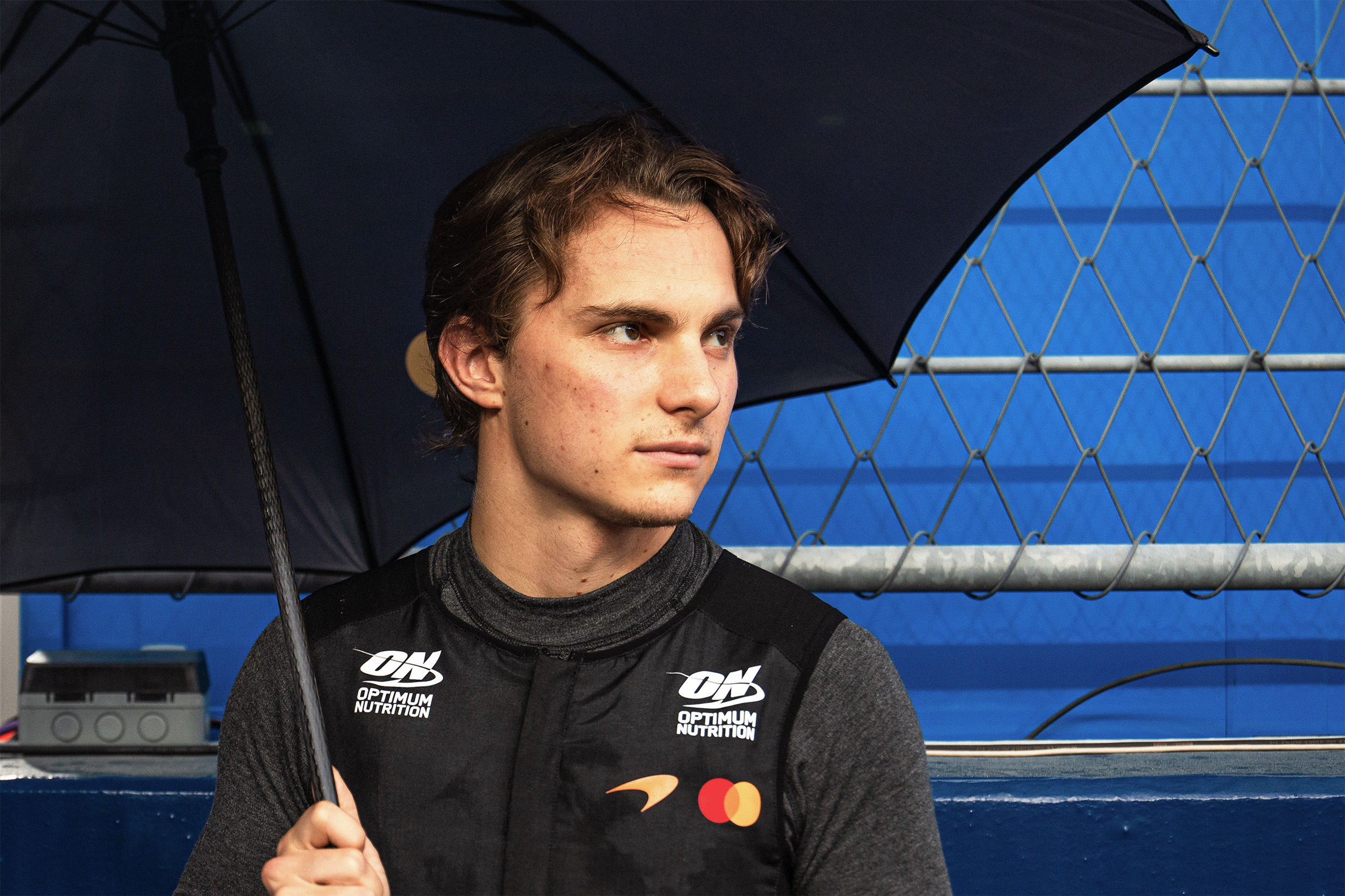
McLaren gained two positions across both cars at the Singapore Grand Prix after its strategy team navigated three distinct and shifting race scenarios at Marina Bay, the team confirmed in an official debrief.
Starting from fifth and sixth on the grid, Lando Norris and Oscar Piastri both advanced by the checkered flag in a race the team described as “very much reactive” — responding to competitors’ decisions rather than dictating the pace of events.
The race began as an expected one-stop on Medium and Soft tyres. Of the top six starters — Max Verstappen, Charles Leclerc, Lewis Hamilton, Kimi Antonelli, Norris and Piastri — only Hamilton lined up on the Medium compound. The rest started on Softs, with teams believing degradation was low enough to run deep into the race on the faster tyre.
Hamilton was the first of the frontrunners to pit, stopping on Lap 18 after McLaren considered undercutting him with Norris. The team had asked Norris directly whether he could run faster in clear air and whether he could pass Liam Lawson quickly enough to make the undercut work. Norris answered yes to both. Hamilton pitted first, however, rejoining behind Lawson before quickly clearing the Racing Bulls driver.
With Hamilton out of the immediate picture, Antonelli, Norris and Piastri immediately dropped their lap times into the 1m37s bracket, compared to Hamilton’s final lap before stopping of 1m39.1. Antonelli pitted on Lap 23, Leclerc on Lap 24. McLaren held both cars out, targeting a tyre delta advantage for a late-race attack. Norris pitted for Mediums on Lap 32, Piastri on Lap 33.
At that point, Norris rejoined with a 10-second deficit to Antonelli, 14 seconds to Hamilton, and 16 to Leclerc, but held a tyre age advantage of nine, 14 and nine laps respectively over those drivers. He cut Antonelli’s gap by three seconds over six laps before a Virtual Safety Car on Lap 39 — triggered by Lance Stroll’s clutch failure — reshuffled the order again.
Leclerc and Antonelli used the VSC to make second stops. Hamilton did not, and neither did the McLarens. McLaren determined a stop would have dropped both cars to fifth and sixth on equivalent-age tyres, with no realistic path to overtake. Staying out preserved track position and kept Hamilton — who also stayed out — within reach.
Once racing resumed, Norris held a 12-second gap to Hamilton. His tyre advantage showed immediately: he closed to within five seconds by Lap 46 and was within Overtake Mode range by Lap 51. Antonelli, on fresher rubber, was closing on Norris at a similar rate. The three-way battle ended with Antonelli passing both Norris and Hamilton, and Norris passing Hamilton for fourth.
Piastri’s race took a separate turn when the team identified a slow puncture on his front-right tyre on Lap 40. He pitted on Lap 41, retaining enough pressure for a normal stop and switching to the Soft compound. The gap to seventh place was large enough that he lost no position. With 20 laps remaining, Piastri sat 42 seconds behind Hamilton but was lapping nearly two seconds per lap faster. As the battle ahead between Hamilton, Norris and Antonelli intensified, his deficit dropped 15 seconds in three laps. He passed Hamilton for fifth two laps from the finish.
Norris had asked late in the race whether he should drop back to assist Piastri against Hamilton, but the team instructed him to stay with Antonelli, noting the Ferrari driver was on three penalty points and could potentially receive a race penalty. McLaren said they were also confident Piastri could complete the pass unaided.