
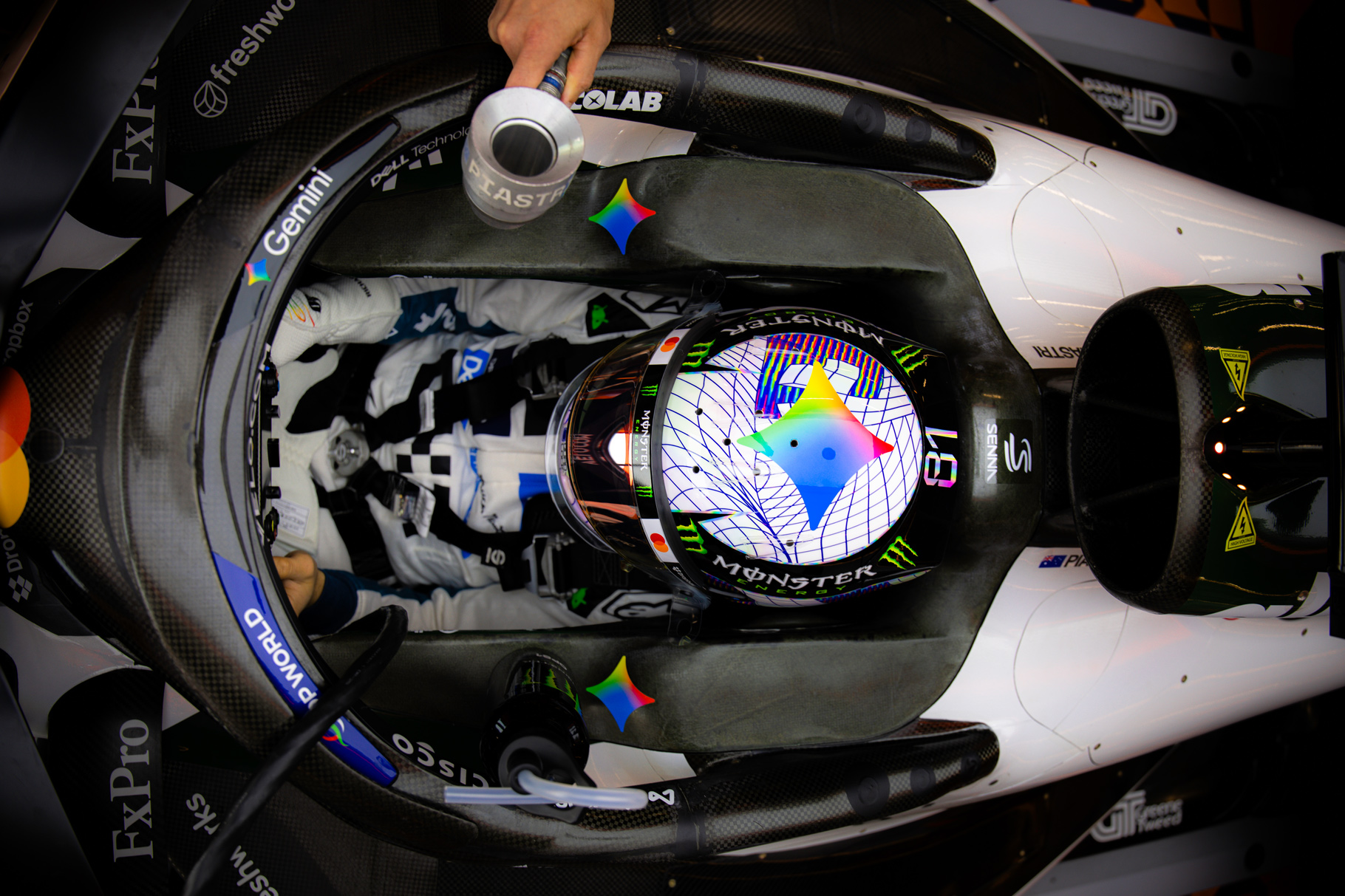
McLaren will bring small updates to its brake ducts and floor for the 2026 British Grand Prix at Silverstone, with Senior Racing Director Randy Singh identifying tyre overheating, wind management, and energy deployment as the defining challenges of the weekend’s Sprint and race.
The team published its pre-race technical briefing ahead of Friday’s opening practice, outlining how the shift from the Red Bull Ring’s short, undulating layout to Silverstone’s long, flat, high-speed circuit demands a fundamentally different car setup. The 51-lap race will test aerodynamic performance through sweeping corners and place significant strain on power units.
Singh said the team expects to run a very stiff car, driven by Silverstone’s smooth surface, low track warp, and high-speed nature. However, harsh kerbs through the Vale and Club complexes will require careful evaluation during practice. Wind direction looms as a variable that could shift the competitive picture throughout the weekend.
“We’re expecting wind from the West — the prevailing direction — which will be a tailwind through Abbey, but we really can’t be certain if it will stay there all weekend,” Singh said. He noted that wind affects not only car balance but also power unit deployment and skid wear, with headwinds and tailwinds changing how much the car contacts the ground.
Pirelli has allocated the C1, C2, and C3 compounds — the same selection used at Suzuka earlier this season, though conditions at Silverstone will be considerably warmer. Singh said the team does not expect the shallow graining seen on the C3 compound at last year’s British Grand Prix, pointing instead to overheating as the likely dominant tyre concern for both the Sprint on Saturday and the Grand Prix on Sunday.
“We’re not expecting graining with this year’s tyres, and are more likely to see overheating,” Singh said. “The biggest decision is going to be around tyres.”
The Sprint format adds a strategic layer, with Singh noting that the team is weighing whether anyone will opt for the Soft compound. Some cars ran Softs the last time a Sprint was held at Silverstone in 2021, but Singh cautioned that the comparison is of limited value given the regulation changes since then.
Simulation data suggests the 2026 cars will carry enough downforce to take much of the lap flat out, particularly the sequence from Woodcote through Chapel, where no lifting or braking is expected. That continuous full-throttle running will make energy management a critical factor and could influence overtaking opportunities.
Despite Silverstone’s reputation as a high-speed circuit, Singh emphasized that low-speed corners deserve equal attention. “Because you spend more time in a low-speed corner, it can often be more rewarding to put effort into those, rather than concentrating purely on high-speed performance,” he said.
McLaren’s updates to the brake ducts and floor will be evaluated during the single practice session before Sprint qualifying. “We’ll be evaluating things across the practice session to make sure they are delivering what they are supposed to deliver,” Singh said.