
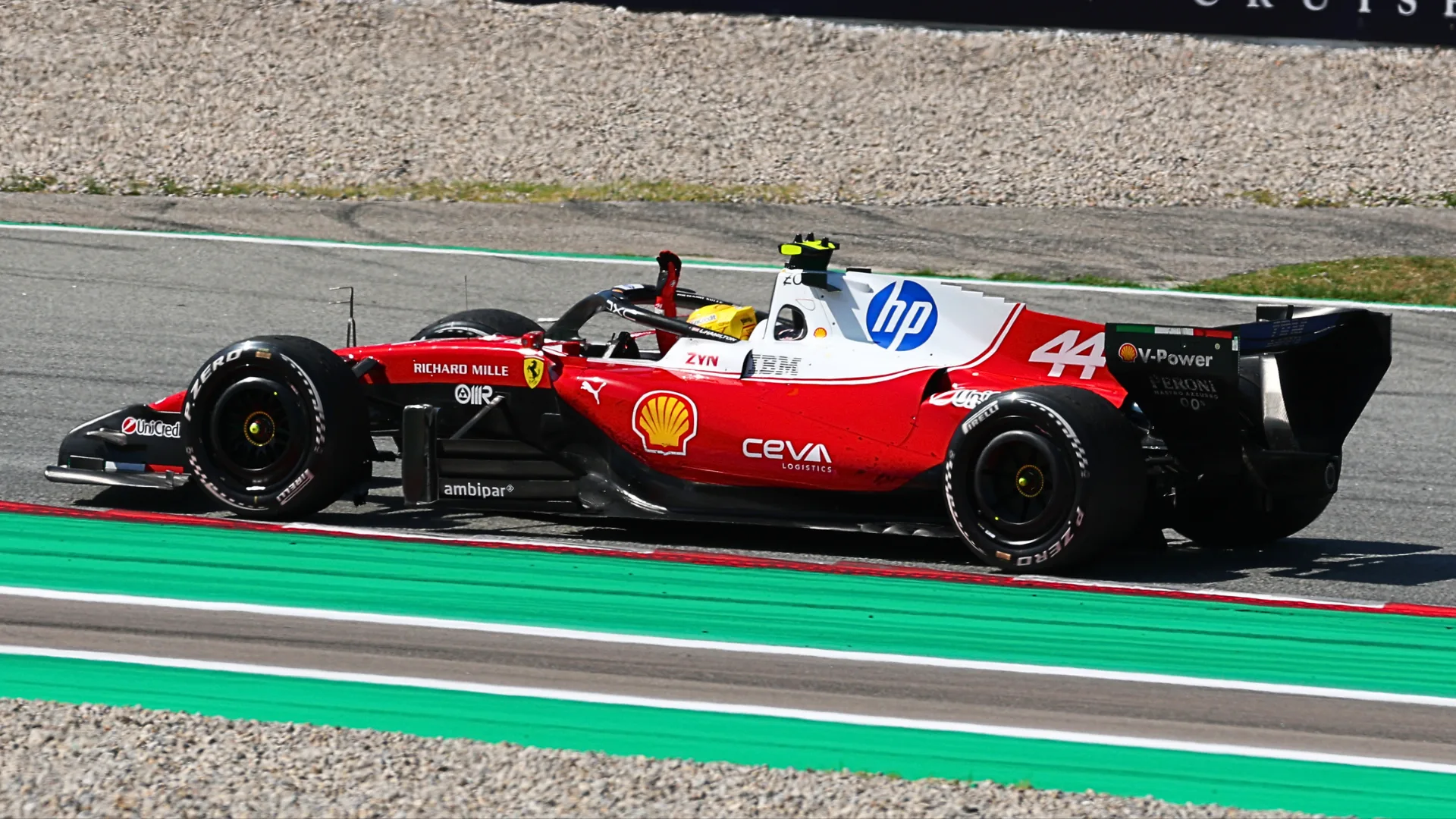
Ferrari have introduced redesigned rear wheel rims developed with supplier BBS as a key component of their upgrade package at the Barcelona-Catalunya Grand Prix, with the new design credited with improving the thermal degradation of the car’s tyres.
The new rims feature a circumferential ring, which appears to be constructed from carbon fibre, affixed at the outer edges of the rim’s face. In a notable departure from the previous design, the conventional spokes have been entirely deleted, representing a significant rethinking of how Ferrari manage heat through their wheel assemblies.
The upgrade formed a central part of the package Ferrari brought to Barcelona last week, signaling the Scuderia’s focus on addressing tyre management as a performance priority. Thermal degradation — the loss of tyre performance caused by excessive heat buildup — has been a persistent challenge across the Formula 1 grid, and Ferrari’s approach through wheel rim redesign represents an innovative avenue for tackling the issue.
By replacing the traditional spoked design with a circumferential ring structure, the new rims likely alter airflow patterns around the rear wheels and brakes, influencing how heat is dissipated or retained in the tyre. Managing the thermal window of the tyres is critical to maintaining consistent lap times across a race stint, and even marginal gains in degradation can translate into significant strategic advantages.
The collaboration with BBS, Ferrari’s wheel supplier, underscores the increasingly specialized nature of component development in modern Formula 1. Wheel rim design has become a fertile area for aerodynamic and thermal innovation since the sport moved to 18-inch wheels, with teams exploring creative solutions within the regulations to extract performance.
Ferrari’s willingness to pursue such a distinctive design change at Barcelona suggests the team identified tyre degradation as a limiting factor in their recent performance and moved aggressively to address it through their upgrade cycle. The Barcelona-Catalunya circuit, with its mix of high-speed corners and abrasive surface, has long served as a proving ground for car developments, making it a logical venue to debut the new hardware.