
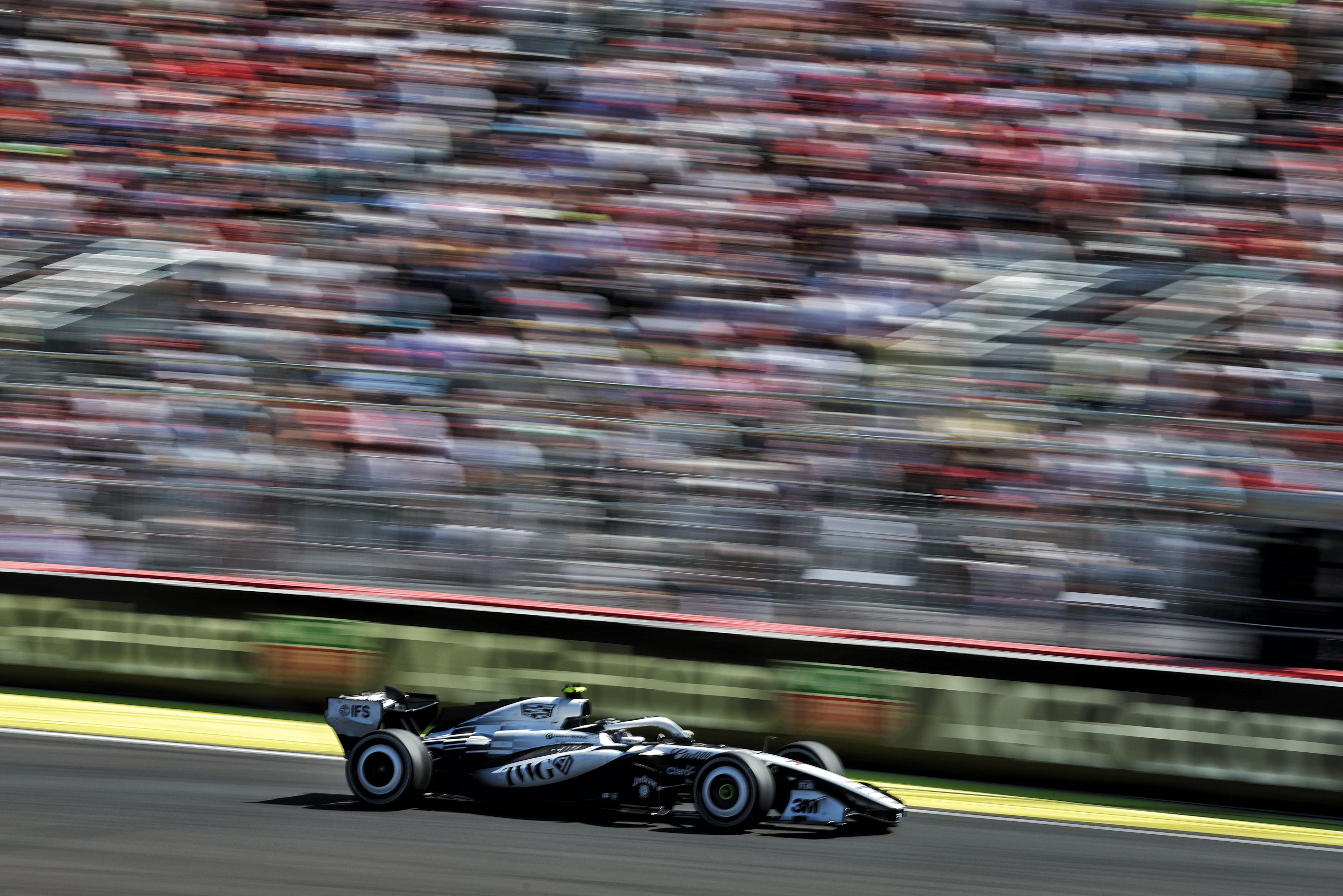
The Cadillac Formula 1 Team arrives in Baku for the Azerbaijan Grand Prix, Round 15 of the 2026 FIA Formula One World Championship, with two drivers who rank among the most successful in the history of the Baku City Circuit.
Team Principal Marcin Budkowski confirmed the squad will also introduce small aerodynamic upgrades during Free Practice, while Sergio Perez is set to run a new-specification Ferrari power unit for the first time this weekend.
“The sequence of flyaway races over the final few months of the Formula 1 season puts significant pressure on a racing team,” Budkowski said in a statement released by the team. “We have some new small aerodynamic upgrades to try in Free Practice as we continue to develop this year’s car.”
Pérez brings one of the strongest records of any active driver at the 6.003-kilometer street circuit. The Mexican has raced in Baku eight times, winning the Azerbaijan Grand Prix twice and standing on the podium on five separate occasions. He arrives motivated after a strong showing in Madrid that ended in retirement. “Our race in Madrid was going very well until we had to retire the car, possibly the strongest we’ve been all season, and I’m eager to get back out and try to replicate that this weekend,” Pérez said.
Bottas, meanwhile, claimed victory from pole position in Baku in 2019 and holds a place in F1 history from the circuit. During practice for the 2016 European Grand Prix — the race’s inaugural edition under that name before it became the Azerbaijan Grand Prix the following year — Bottas was recorded at 378 km/h (235 mph), the fastest speed ever measured on an F1 race weekend. “I’ve got some great memories from Baku, having won there in 2019, so it’s always a special place to come back to,” Bottas said.
The Baku City Circuit presents one of the most demanding technical challenges on the calendar. Its 2.2-kilometer boulevard section is the longest full-throttle stretch in Formula 1, while the remainder of the lap winds through the Old City past UNESCO World Heritage Sites including the 12th-century Maiden Tower and the 15th-century Palace of the Shirvanshahs. The combination of high-speed straights and tight 90-degree corners forces teams into difficult setup compromises.
Conditions add further complexity. Baku sits on a promontory exposed to two competing winds — the Khazri from the north and the Gilavar from the south — which can transform the main straight into either a tailwind or a headwind depending on the day. The circuit’s low grip levels, a consequence of the road surface being used by regular traffic for 51 weeks of the year, have historically contributed to a high incidence of red flags and Safety Car periods.