
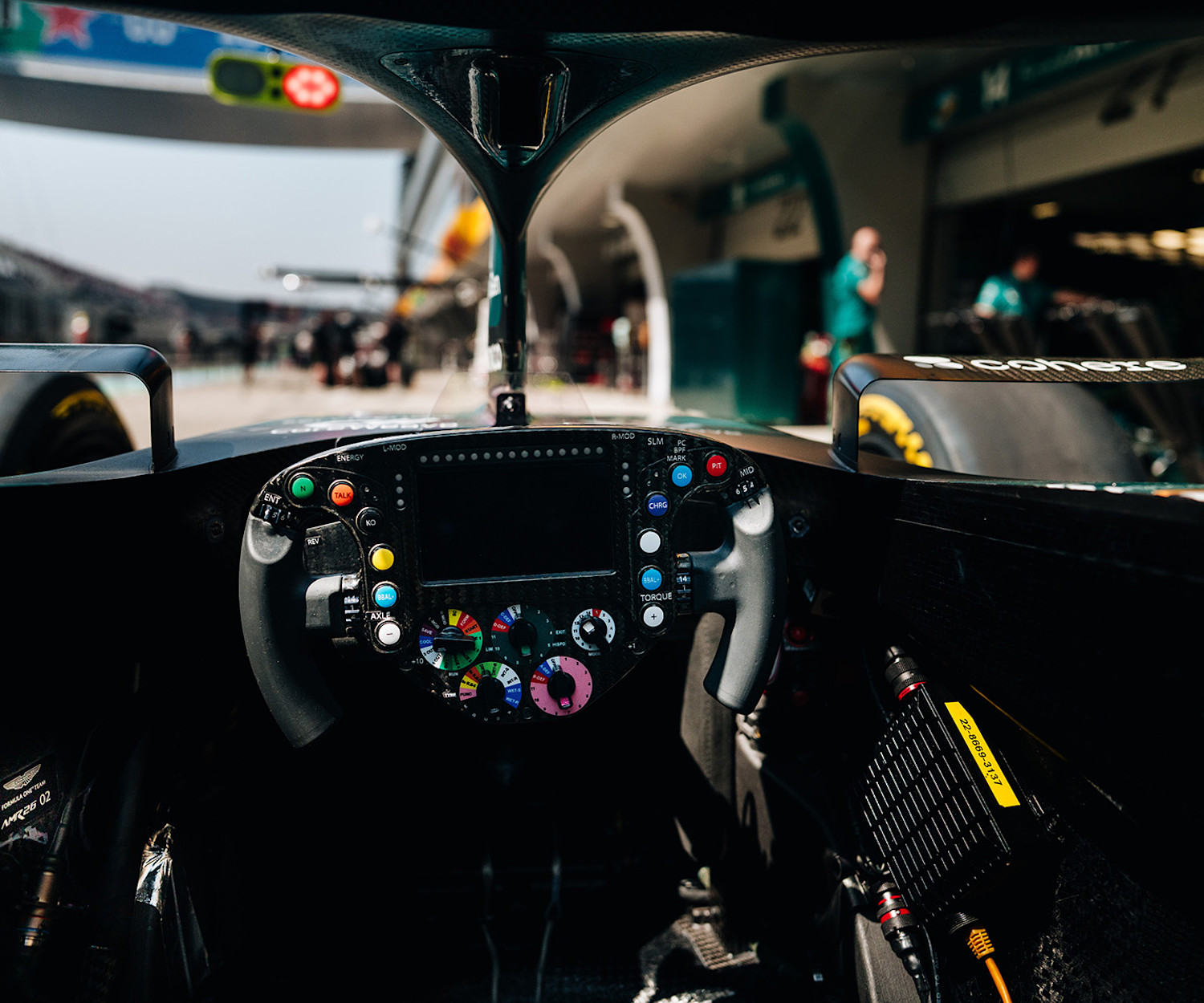
Aston Martin has offered a detailed look at how Formula One drivers are adapting to the sport’s sweeping 2026 technical regulations, with team representative Pedro de la Rosa outlining the cockpit challenges posed by new energy deployment systems, active aerodynamics and dramatically altered braking characteristics several races into the season.
De la Rosa, who has lived through multiple technical eras of Formula One, said teams are beginning to converge on optimal energy strategies after a period of experimentation in the opening races. “Everyone is learning the most efficient way to use their energy and, as a result, starting to follow similar strategies,” de la Rosa said. “We’ll start seeing everyone with the similar energy maps in the coming Grands Prix.”
One of the most significant adjustments for drivers Lance Stroll and Fernando Alonso involves battery recharging through aggressive downshifting in corners. De la Rosa explained that using the shortest possible gear ratio maximizes energy recovery because higher revs charge the battery faster, but the technique comes at a cost. “It’s not ideal to downshift all the way to first gear for a hairpin because there’s a massive kick on the rear axle,” he said. “It’s good for the battery, but it makes the rear end of the car very difficult to control.”
The 2026 regulations introduced two distinct power tools for drivers. Overtake Mode grants an additional 0.5 megajoules of energy to any driver within one second of the car ahead at a designated track point, deployable anywhere on the lap. Boost Mode, separate from Overtake Mode, delivers maximum combined engine and battery power at the push of a button and is available to all drivers regardless of track position. De la Rosa called the 0.5 megajoule overtake allocation “a huge amount of extra energy” that forces drivers to choose the right moment to deploy it.
Active aerodynamics represent one of the most visible changes to the cars. Drivers switch between Corner Mode, with wing flaps closed for maximum downforce, and Straight Mode, where front and rear wing elements open to reduce drag and increase top speed at designated high-speed sections. De la Rosa noted that reduced overall aerodynamic performance compared to the previous generation of cars, owing to smaller wings and less downforce, compounds the rear-end stability challenges drivers already face from the power unit’s behavior.
Brake balance adjustments have taken on heightened importance under the new regulations. De la Rosa explained that the increased torque delivered through the rear wheels means engine braking contributes more force to slowing the car, shifting the brake balance rearward more aggressively than in previous seasons. “It’s a big challenge for the drivers to be very precise on the brakes and recover as much energy as possible,” he said. “If the rear is not stable, you cannot brake as hard, and if you cannot brake as hard, you can’t regenerate as much.”
Simulation work before each race weekend has become critical to unlocking performance. Teams arrive at circuits with baseline energy maps that dictate where to harvest energy, where to lift and coast, and where to use superclipping, a technique in which the MGU-K diverts power that would normally drive the rear wheels and stores it as electrical energy.
The insights come ahead of the Austrian Grand Prix at the Red Bull Ring, a circuit de la Rosa described as one of Formula One’s most exacting tests with its heavy braking zones, rapid direction changes and long straights, making it a fitting venue to measure how far teams and drivers have come in mastering the new era.